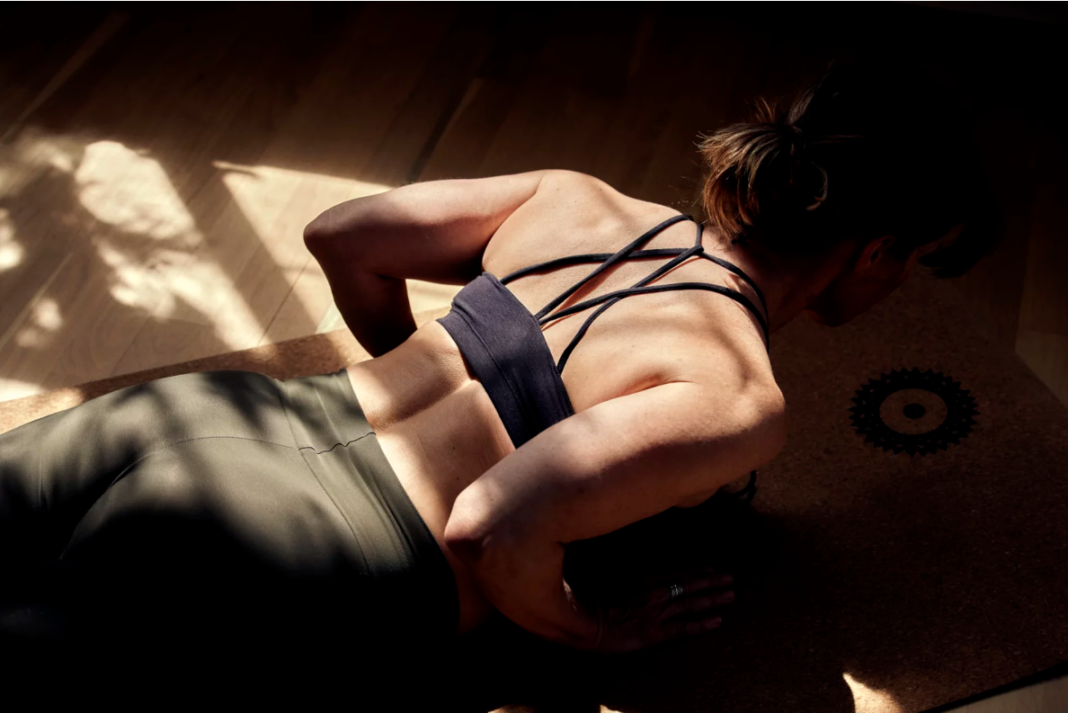

I. Signals from the Body
Lately, this late-millennial body of mine has started sending out some rather unfriendly signals. My back aches faintly, and my knees emit a strange creaking sound whenever I bend them. I could blame it all on age—but that’s not the whole story. I gave birth to my second child last autumn and signed up for a half-marathon this spring; consequently, the only form of exercise I’ve been able to squeeze into my schedule lately is running.
Running certainly benefits cardiovascular health, but it does almost nothing to build strength or flexibility. It leaves me feeling like the Tin Man from The Wizard of Oz—my joints feel rusty and in dire need of oiling.
So, when someone asked if I’d be willing to spend two weeks experimenting with a method called “exercise snacking,” I said yes without hesitation.
II. What Is “Exercise Snacking”?
This concept is sometimes described as “micro-dosing” your fitness—breaking exercise down into shorter, more frequent segments. It might involve a one-minute burst of squat jumps, or perhaps a ten-minute Pilates session. It’s currently a huge trend among fitness influencers because it helps break up long periods of sitting and makes exercise seem far less intimidating—after all, who can’t manage to exercise for just one minute?
Numerous studies have shown that even short bursts of physical activity can be effective in boosting cardiovascular health, insulin sensitivity, and muscle strength.
I devised a plan for myself: schedule two or three “exercise snacks” each day—each lasting between one and ten minutes—that focus primarily on strength or flexibility. These sessions might take place while my six-month-old baby is babbling happily on the floor, during the brief interval while I wait for my coffee to brew, or simply when I feel the need to step away from my computer and stretch my legs.
III. Expert Advice
On the very first day of my experiment, I happened to have a phone conversation with exercise physiologist Dr. Rachelle Reed. I asked her how I could ensure that these short bursts of activity were actually doing any good. Her answer was simple: to be effective, you have to push yourself hard. “Do intense stair climbing rather than a leisurely stroll; lift heavy weights—not the kind you can easily rep out thirty times.” She specifically recommended compound movements to activate as many muscle groups as possible within a short timeframe. “If you do a minute of squats immediately followed by overhead presses, I guarantee you’ll be absolutely floored,” she said.
Armed with this advice, I compiled a list of eight strength-training exercises—mostly compound movements—that specifically targeted the muscle groups essential for running (hamstrings, quadriceps, glutes, calves, and core), while also ensuring balanced, full-body strength development. I also included a few sets of plyometric jumps, knowing they would help boost my running explosiveness. With these fixed options in place, I could dive right in without wasting time agonizing over what to do.
As for flexibility, I gave myself a bit more wiggle room. I didn’t create a rigid checklist of movements; instead, I simply spent a few minutes each morning doing whatever felt good—stretching movements akin to gentle yoga—responding to whatever my body seemed to need at that moment. This allowed me to assess my physical state for the day and loosen up any tight areas.
IV. Results: The Good Parts
Let’s start with the positives. This approach completely stripped “lack of time” of its validity as an excuse. Even on my busiest days, I could always find sixty seconds to drop down and hold a plank, or knock out a few sets of squat jumps (though I often had to cup my hands over my chest while jumping, simply because I couldn’t be bothered to change into a sports bra).
And I actually saw some tangible results. To be honest, I was shocked at how sore I could get after just a few minutes of exercise. As long as I pushed myself with the same intensity I would during a full-length workout—simply spreading that effort out across the week—my muscles continued to get stronger. (Not to brag, but within two weeks, my upper-body strength had reached an all-time high; I was able to do more push-ups than ever before.) Even better, my joints no longer felt so worn down and achy after a run. While I can’t claim my back pain vanished completely, it certainly became much less bothersome.
V. Results: The Not-So-Ideal Parts
However, these “exercise snacks” didn’t turn out to be the perfect panacea I had hoped for—the magic cure that would instantly resolve the imbalances in my fitness routine. First, I quickly realized that unless I specifically carved out time for exercise—as I usually do—it was all too easy to simply forget about it, even though I am generally someone who enjoys working out. On the second day of the experiment, I spent five minutes doing flexibility stretches, as that felt like a natural extension of my morning routine—sipping coffee while playing with my baby on the floor. But by evening, I found I had completely forgotten to do any strength training whatsoever. On the third day, it didn’t even cross my mind until 7:13 PM.
I had assumed that these “exercise snacks” would naturally weave themselves into my day; the reality, however, is that unless I schedule it—yes, even if it’s just for a single minute—or anchor it to another existing habit, it simply won’t happen.
Furthermore, I found myself more prone to slacking off during these “snack” sessions. Sometimes, halfway through a set, I’d get distracted by other tasks that needed doing. Without changing into workout gear, without a formal warm-up, and without a dedicated time slot, it was psychologically much harder to get into the zone.
That said, when I was in the right frame of mind, these exercise snacks felt just like eating Pringles: once I started, I couldn’t stop. I’d get into a groove and keep adding more reps or exercises, simply because I loved the way my body felt. What started as a plan to do just a few sets of Bulgarian split squats would quickly escalate to include pogo jumps and push-ups. Before I knew it, I found myself doing calf raises while washing the dishes, or holding a side plank while my husband told one of his never-ending stories.
VI. Will I continue?
As far as flexibility goes, I definitely will. Spending a few minutes each morning doing Cat-Cow poses and Downward Dogs is a comfortable, low-key way to make my body feel better—and it serves as the first “small win” of the day.
However, when it comes to “micro-dosing” strength training, I view it more as a backup plan for busy weeks rather than a long-term strategy. By adopting this “snack” approach, the total amount of time I spend exercising each week actually ends up being roughly the same as if I had done two dedicated 20-to-30-minute strength sessions. Yet, I feel that setting aside a specific block of time to fully immerse myself in a workout provides a more complete psychological and physical release than simply multitasking through a few isolated movements. With sessions lasting only a minute or two, I don’t get that same sense of accomplishment or that satisfying feeling of a fully stretched and worked-out body. Plus, I’m left with a perpetual sense that I’m “not quite finished”—after all, even if I’ve already completed several “exercise snacks” throughout the day, who’s to say I can’t squeeze in just one more set? However, at certain stages of life—such as right now, when I am unable to engage in “full-meal-level” training on a regular basis—fitting in a few “snacks” serves as an excellent transitional strategy.

