
I. The Starting Point: 2013
I served in the military starting in 2013. Those were days filled with structure, discipline, and clear objectives. You knew exactly what to do each day, who your superiors were, and when a mission was complete. Such clarity is a rare commodity in civilian life—something I hadn’t yet realized at the time.
In 2021, I completed my military transition and officially retired. That same year, the world was undergoing a transition of its own: the pandemic had disrupted every familiar rhythm. Gyms closed, social events were canceled, and even a simple trip to the grocery store required wearing a mask. I found myself in an unfamiliar city—without my military comrades, without a familiar schedule, and without that sense of being “needed.”
The darkness descended faster than I could have imagined.
II. Lost in the Pandemic
During the first few months after my discharge, I tried to manage my life the military way: waking up early, making plans, and executing them with strict discipline. But the inherent ambiguity of civilian life left me feeling completely adrift. No one blew a whistle at 5:00 AM to wake me up; no one inspected my gear to ensure it was in order; and no one gave me a pat on the back and said, “Well done,” after I completed a task.
The pandemic only exacerbated this sense of being lost. I couldn’t fill the void through socializing, couldn’t relieve stress by going out for a run, and couldn’t forge a new identity by participating in community activities. I began to suffer from insomnia and anxiety, and during the day, I felt an indescribable emptiness.
One day, while sorting through my belongings, I stumbled upon a flyer for a yoga studio—something I had absentmindedly stuffed into my bag before leaving the service, originally intending to give it to a friend. The flyer read: “Online Classes: Open as Usual During the Pandemic.” I stared at those words for a long time, then turned on my computer.
III. My First Online Yoga Class
The first session was a basic Hatha yoga sequence. I sat on my living room floor, following the instructor on the screen as we moved through the Cat-Cow pose. The movements were simple, yet I discovered that my body was as stiff as a wooden plank—not from a lack of physical activity, but from months of pent-up tension. In the military, you learn to remain constantly alert—shoulders always slightly hunched, core always slightly engaged. On the battlefield, this “state of readiness” is a survival skill; in the living room, however, it becomes a burden.
The instructor’s voice drifted from the speakers, slow and steady: “Inhale, lengthen the spine; exhale, relax the shoulders.” I followed her instruction. In that fleeting moment of exhalation, I experienced a sensation I hadn’t felt before—my shoulders dropped, as if a heavy weight had been temporarily lifted. The moment was brief, yet profound enough to leave a lasting impression.
I began attending online classes regularly—not every day, but three or four times a week. I didn’t have to leave the house or make small talk with strangers; I simply had to click a link, unroll my mat, and move my body in sync with my breath. For someone like me—still in a state of social withdrawal at the time—this low-barrier approach to participation offered a form of gentleness that felt exactly right.
IV: From Postures to Breath, From Breath to Calm
Initially, I approached yoga just as I had approached military training: striving for precision, perfection, and the absolute “correctness” of every movement. I would grow frustrated when I couldn’t execute a certain pose perfectly, and feel defeated when my flexibility fell short of the other students I saw on the screen.
However, online classes possess a unique characteristic: you cannot see the others. You see only the instructor—and she rarely demonstrates the most advanced, high-difficulty variations. Instead, she focuses primarily on the breath—on finding stability within movement, and on exploring the body’s boundaries without forcing them.
Gradually, my focus shifted from “how far can I go?” to “what am I feeling?” I began to notice the rhythm of my breath—the expansion of my ribcage on the inhale, the gentle sinking of my abdomen on the exhale. These subtle sensations were things I had learned to ignore in the military, where the emphasis lay strictly on results rather than the process itself.
The isolation imposed by the pandemic unexpectedly created a unique space: a space devoid of external judgment or points of comparison—a space containing only you and your breath. This solitude felt unsettling at first, but gradually, it transformed into a gift. Finally, I had the time to ask myself: How do I feel right now?—rather than: What must I accomplish?
V: The Convergence of Military Discipline and Yoga Philosophy
Interestingly, certain lessons I had learned in the military found a new form of expression within the practice of yoga. Discipline—in the military, it means obeying orders, reporting for duty on time, and executing tasks with strict precision. In yoga, it transforms into the daily habit of unrolling one’s mat—a commitment to take five deep breaths, even on days when one feels no desire to move. This form of self-discipline is no longer about meeting external standards, but rather about tending to one’s own inner state.
Focus—in the military, it means maintaining clarity under pressure and identifying threats amidst chaos. In yoga, it evolves into maintaining awareness of the breath and preserving a sense of calm even in the face of physical discomfort. This focus is no longer a means of survival, but a mode of being.
Teamwork—in the military, it means trusting your comrades and knowing that someone has your flank covered. In yoga, it transforms into trusting this online community—knowing that, on the other side of the screen, dozens of people are breathing, moving, and seeking a sense of peace right alongside you. This connection is invisible, yet no less real.
VI. Stepping Out of the Darkness—Not Forgetting It
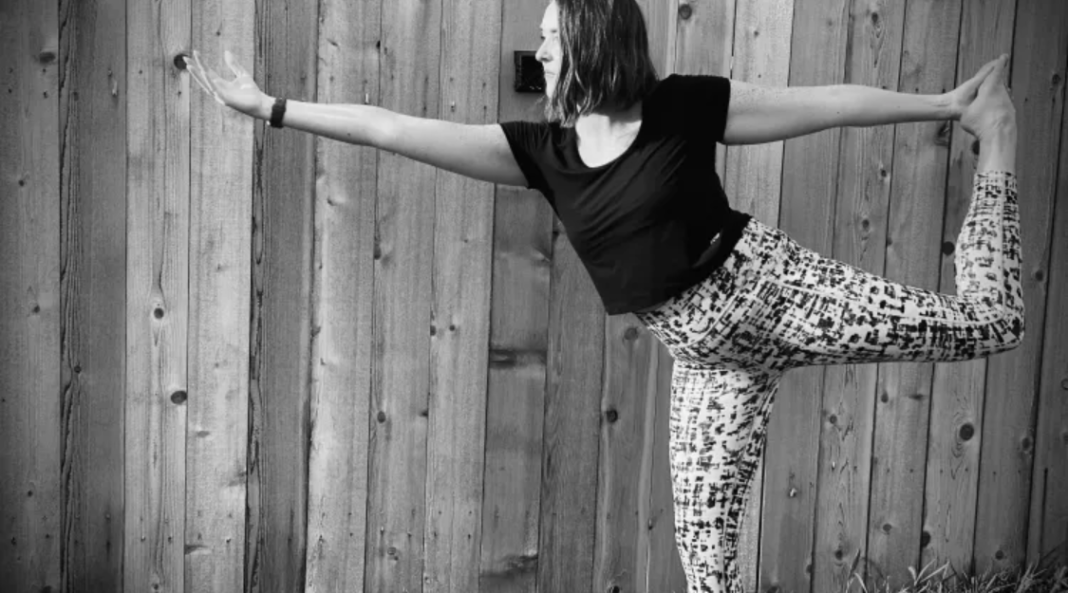
I continue to practice yoga to this day. The pandemic has ended, and in-person classes have resumed, yet I have retained the habit of practicing online. Sometimes I practice in the early morning, other times late at night—depending on my work schedule and mood for the day. I no longer need yoga to “save” me, but I need it to serve as a reminder: that the darkness once existed, and that I possessed the strength to emerge from it.
The transition from military life presented me with a void in my sense of identity; the pandemic created a void in my social world; and yoga offered me a void—a sacred space—for being with myself. At the intersection of these three voids, I learned something profound: not how to become stronger, but how to become softer; not how to exert more control, but how to allow for more openness.
Stepping out of the darkness does not mean that the darkness never occurred. It means that you carried that experience within you, and that it ultimately became a part of who you are—just as my years in the military became a part of me, and just as the solitude of the pandemic became a part of me. Yoga did not erase these things; rather, it provided me with a vessel—a safe container—in which I could coexist with all these experiences without being overwhelmed by them.

