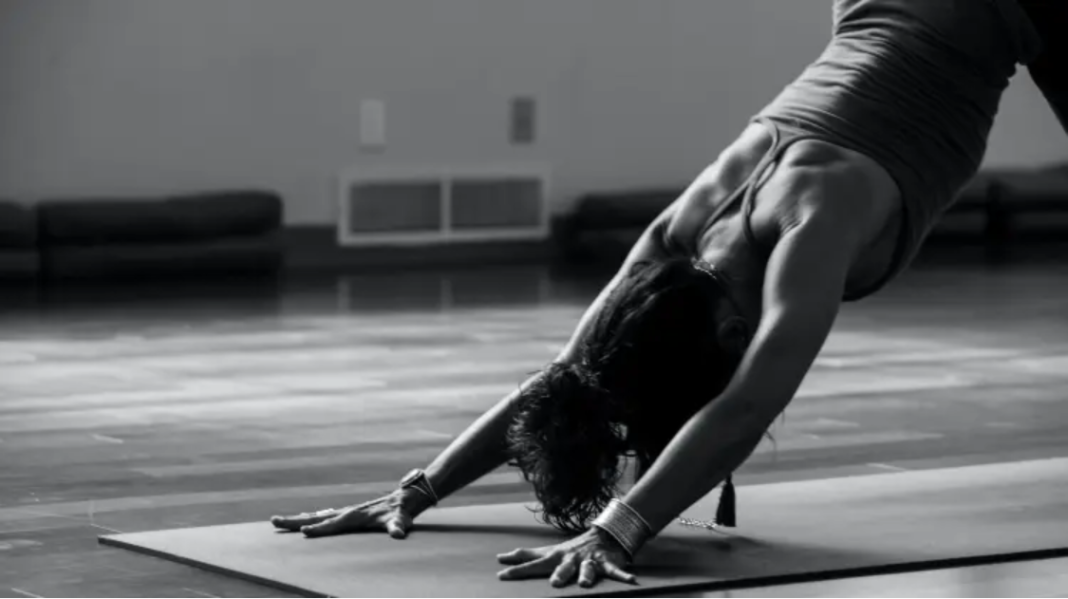

I. Strength Is Not the Opposite of Yoga
There is a common misconception that yoga is solely about flexibility, while strength training belongs in the gym. This dichotomy overlooks one of yoga’s oldest traditions: in the classical Indian context, asanas (poses) were never intended for performative contortion, but rather for cultivating stability and endurance within stillness. Strength and flexibility are not opposing poles, but two sides of the same coin.
If you are already practicing yoga but feel you’ve hit a plateau in your strength gains—or if you are simply looking for a way to build functional strength without relying on dumbbells and barbells—the following insights may offer you some direction.
II. The Core: The Foundation of All Stability
Core strength is the bedrock of almost every yoga pose. The muscle groups of the abdomen, obliques, and lower back work in unison to maintain the body’s stability during challenging postures. Balancing poses performed without adequate core support will feel shaky and unsteady.
Here are a few core-strengthening exercises you can incorporate into your daily practice:
Plank Pose
Hold for 30 seconds to 1 minute, focusing on engaging your entire body—including your abdominal muscles—while keeping your body aligned in a straight line. If this feels too difficult at first, start with 10–15 seconds, perform multiple sets, and gradually build up your strength. Trembling is normal—it simply means your muscles are adapting to the new load.
Boat Pose (Navasana)
Sit on the floor and lift your legs until they are roughly at eye level; balance on your sit bones while keeping your spine straight. Hold for 20–30 seconds. This pose may look simple, but the challenge it poses to the lower abdomen is very real.
Supine Leg Raises
Lie flat on your back, then slowly lift your legs toward the ceiling before slowly lowering them back down to the floor. Keep your core engaged and your lower back pressed firmly against the ground throughout the entire movement. Keep your legs together and actively engaged. Repeat 10–15 times.
Consistency is key. By practicing 3–4 times a week—even if it’s just doing a few sets while watching TV—you will gradually begin to notice improvements in your balance and stability within your yoga practice. —
III. Balance: More Than Just a Physical Act
Balance is not merely physical; it is also mental. Focus and breath control play a crucial role in maintaining stability within a pose. When the mind is calm and focused, the body naturally follows suit.
Here are some key points for enhancing balance through mental focus and breathwork:
Gazing Point (Drishti)
Fix your gaze on a single point in front of you. This simple action can significantly reduce physical wobbling, as it minimizes the visual input that might otherwise interfere with your vestibular system.
Ujjayi Breath
Slow, controlled breathing soothes the nervous system and heightens concentration. In balancing poses, the steadiness of your breath often determines how long you can hold the pose more than sheer muscular effort does.
Core Activation
Yes, the core makes an appearance once again. During every attempt at a balancing pose, consciously engage your abdominal muscles—imagine gently drawing your navel inward toward your spine. This subtle activation acts as an invisible scaffold, providing stability for your body.
By integrating these techniques, you forge a mind-body connection that provides a solid foundation for physical balance.
IV. Props: Not a Sign of Weakness, But of Wisdom
Yoga blocks, straps, and walls are invaluable tools for improving both balance and strength. They provide support, helping you maintain proper alignment while simultaneously building your confidence.
Yoga Blocks
In standing balancing poses—such as Warrior III or Half Moon Pose—placing a yoga block beneath your hand adds stability, allowing you to focus on the essence of the pose rather than the fear of fighting against gravity.
Walls
Practice poses like Tree Pose or Dancer’s Pose near a wall, letting it serve as your safety net. You can lightly touch the wall to find your equilibrium, then gradually reduce your reliance on it over time.
Straps
In poses like the Extended Hand-to-Big-Toe Pose, use a strap to extend your range of motion; this allows you to improve both balance and flexibility while avoiding injury caused by overstretching.
Adjusting poses to suit your current level allows you to progress safely and steadily. This is not a compromise, but rather an act of respect for your body’s current capabilities. —
V. Integrating Strength Building into Daily Life
Consistency is crucial for developing strength and balance in yoga. Here are some practical tips for incorporating the techniques mentioned above into your daily practice:
Set a Schedule
Dedicate 15–30 minutes each day specifically to balance and strength exercises. Regular, short sessions are far more effective than occasional, lengthy ones.
Warm Up Thoroughly
Always warm up your wrists, shoulders, and core before attempting challenging poses. Cold muscles are more susceptible to injury, and an injury can interrupt your progress in building strength.
Listen to Your Body
Avoid pushing yourself too hard. Progress happens gradually, and preventing injury is far more important than chasing some imagined timeline for advancement.
Celebrate Small Victories
No matter how minor, every improvement is worth acknowledging. Holding a pose for an extra second, wobbling a little less, or taking a steadier breath—these are all signs of genuine progress and serve as motivation to keep practicing.
Building strength in yoga isn’t about lifting heavier weights; it’s about finding stability within the weight of your own body. It’s not about moving faster, but rather about moving more slowly, more deeply, and more consciously. When you hold a Plank pose for an extra ten seconds, find your balance in Tree Pose without relying on a wall, or hold Boat Pose without trembling—these moments, in themselves, are strength.
This strength extends beyond the mat. You will find yourself standing taller, walking with greater stability, and facing life’s imbalances with greater confidence. For what yoga truly teaches you is never how to control the external world, but rather how to find that unshakable center within yourself.

